Porsche 911 Carrera (996/997) Jacking Up Guide
Extracted on 2026-07-28 17:53 UTC
Source: PelicanParts Technical Article Author: Wayne R. Dempsey
Overview Table
| Field | Detail |
|---|---|
| Article | Jacking Up Your Porsche 911 Carrera |
| Applicable Models | Porsche 996 Carrera (1998–2005), 996 Turbo/GT2/GT3 (2001–2005), 997 Carrera (2005–2008), 997 Turbo/GT2/GT3 (2007–2008) |
| Time Required | ~20 minutes |
| Estimated Cost | $0 |
| Skill Level | ★★ (beginner) |
| Tools Required | 2-ton floor jack, jack stands (4), jack pad tool |
| Parts Required | None |
| Hot Tip | Stack the wheels under the car as an added safety measure |
| Performance Gain | Starting point for all work underneath the car |
| Complementary Mod | Check front & rear suspension bushings |
Tools Required
- 2-ton floor jack
- 4 jack stands
- Jack pad tool (or a rolled-up newspaper / hockey puck)
- Wheel chocks
- 2x4 pieces of wood (optional, extra safety)
Article Content
Safety First
About one-third of all tasks that you need to perform on your 911 require it to be raised off of the ground. Simple enough for the experienced mechanic, the procedure of lifting a 3,000-pound car can be a bit unnerving for the amateur.
Before you begin raising the car, make sure that you have the wheels of the car blocked so that it can't roll. It's also wise to have your parking brake on as well and the car placed in first gear.
Always use jack stands in pairs to support the car — not simply the floor jack. Even if you are only lifting the car up for a few minutes, make sure that you place an emergency jack stand loosely underneath the transmission, motor, or rear differential just in case the floor jack fails.
Preparation
Before you begin jacking up the car:
- Make sure all four wheels are carefully chocked and the car is on a level surface.
- Keep in mind that if you raise the rear of the car, the emergency brake no longer works (it works only on the two rearmost wheels).
- If you place the car in park (automatic transmissions), it will only lock the rear wheels.
- Place a few 2x4 pieces of wood in front of each of the wheels to make sure the car will not roll when lifted.
Jack Stand Placement
The ideal place for jack stand supports is right underneath the four standard factory jack supports. Except for the emergency back-up jack stand mentioned above, the author does not recommend placing jack stands underneath the engine or transmission, as this can lead to instability.
Step 1: Jack Up the Front
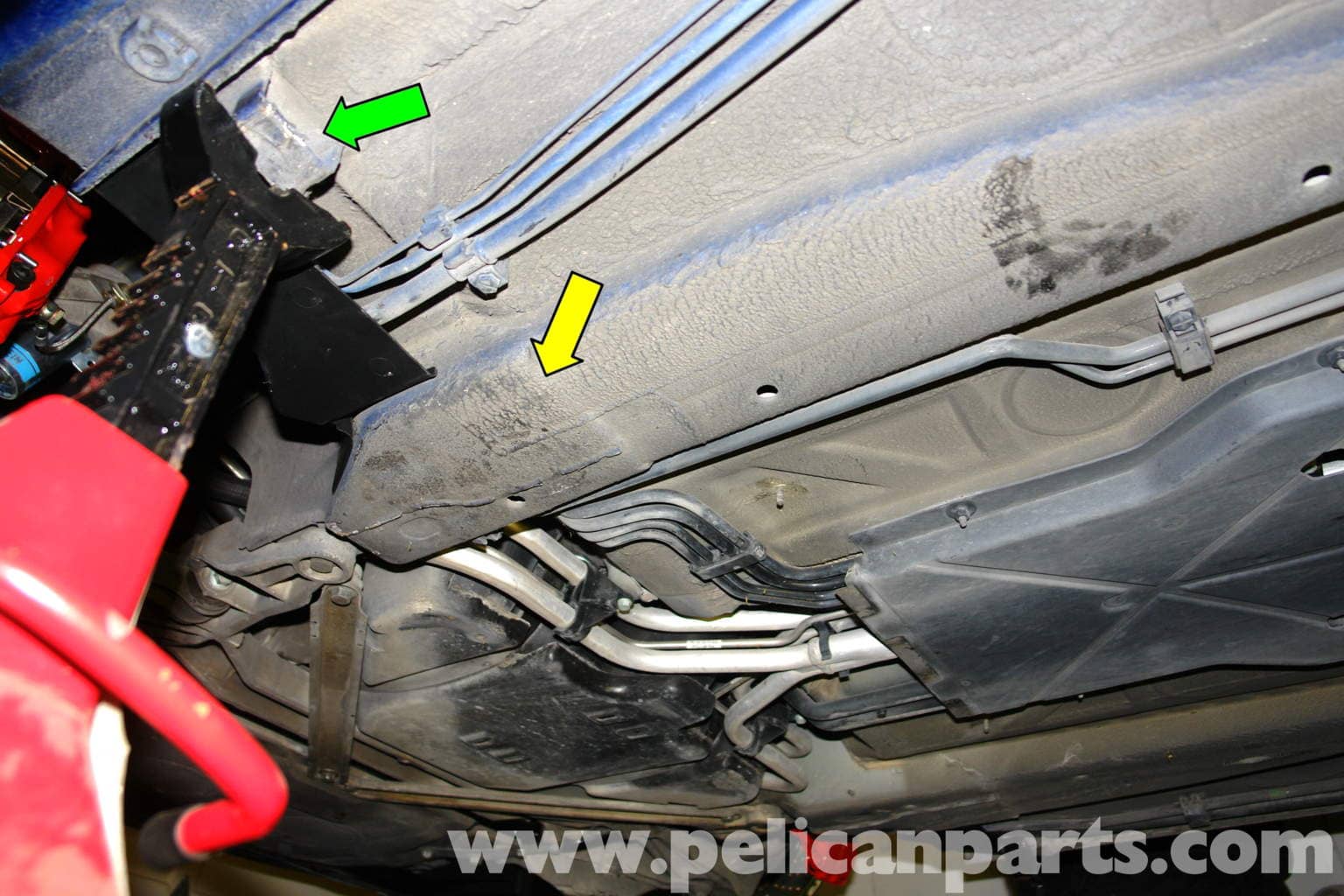
The author typically likes to jack up the front of the car first. Use the reinforced area of the chassis shown in Figure 1 (yellow arrow). If you don't have a soft rubber pad or spare hockey puck for your jack, then fit a rolled-up newspaper between the jack and the car to avoid damage to the undercarriage.
Lift up the car slowly. It's perfectly fine if the car tilts while the wheels on the opposite side are still on the ground. Depending on where you placed your jack, both front wheels may come off the ground or both wheels on one side may come off.
Lift the car only enough to get the jack stand underneath while it's set at its minimum height. Place the jack stand securely under the factory jack support area (green arrow), and slowly lower the car. If your car is spotless, place a little bit of newspaper between the jack stand and the car to avoid scratching the underside.
If you are lifting the front of the car, place a jack stand under the front reinforced plate, lower the car onto the jack stand, and then repeat for the opposite side.
Step 2: Jack Up the Rear
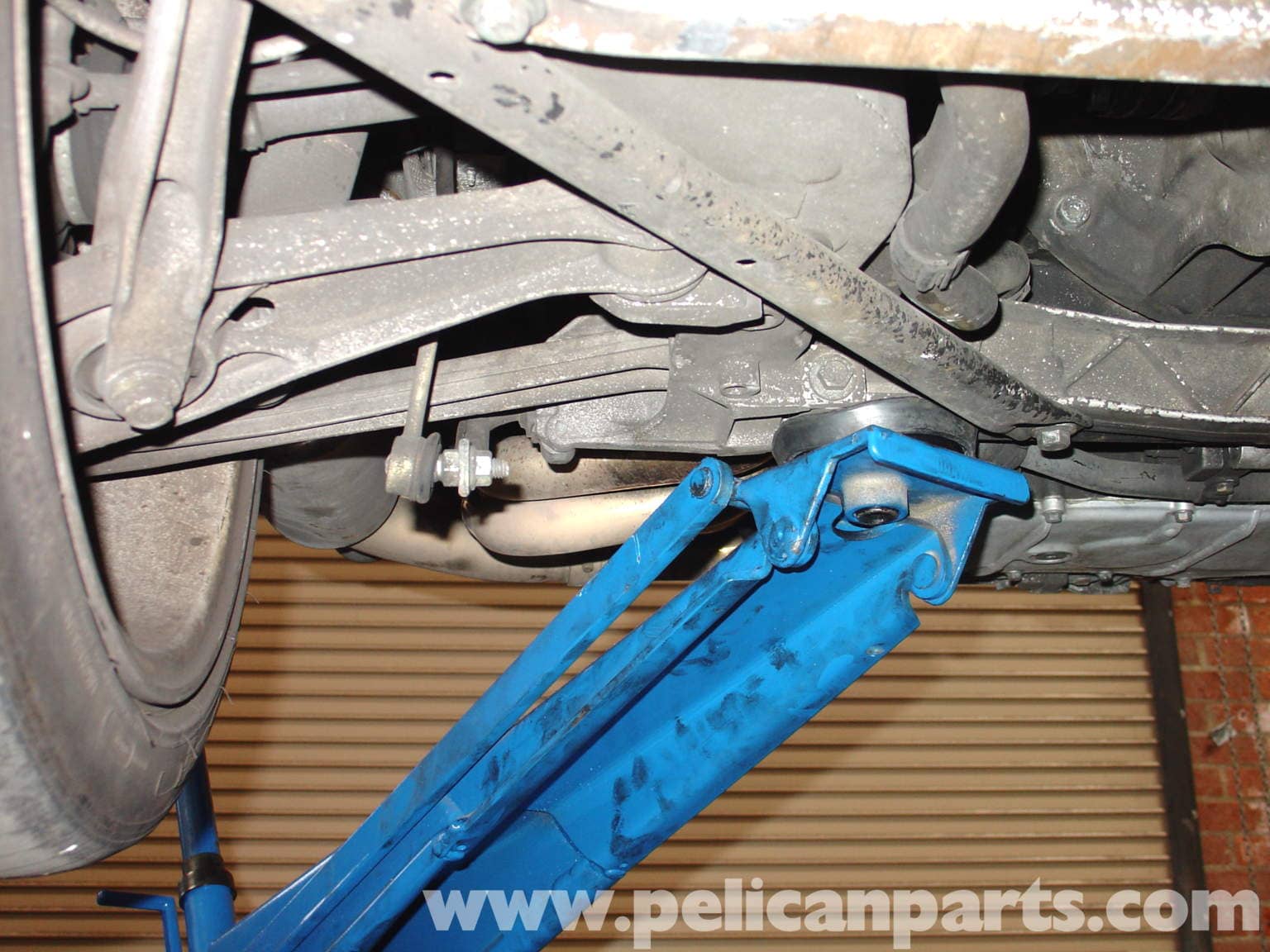
Jack up the rear of the car using the point shown in Figure 2. This is the rear suspension mounting point — it attaches close to the transverse support bar and is very strong. Avoid lifting the car using any part of the engine.
Jacking the car up from this point will typically raise the entire rear of the car, allowing you to set both rear jack stands in place at the same time. Set the height on the jack stands to be the same as the ones for the front.
Step 3: Support with Jack Stands
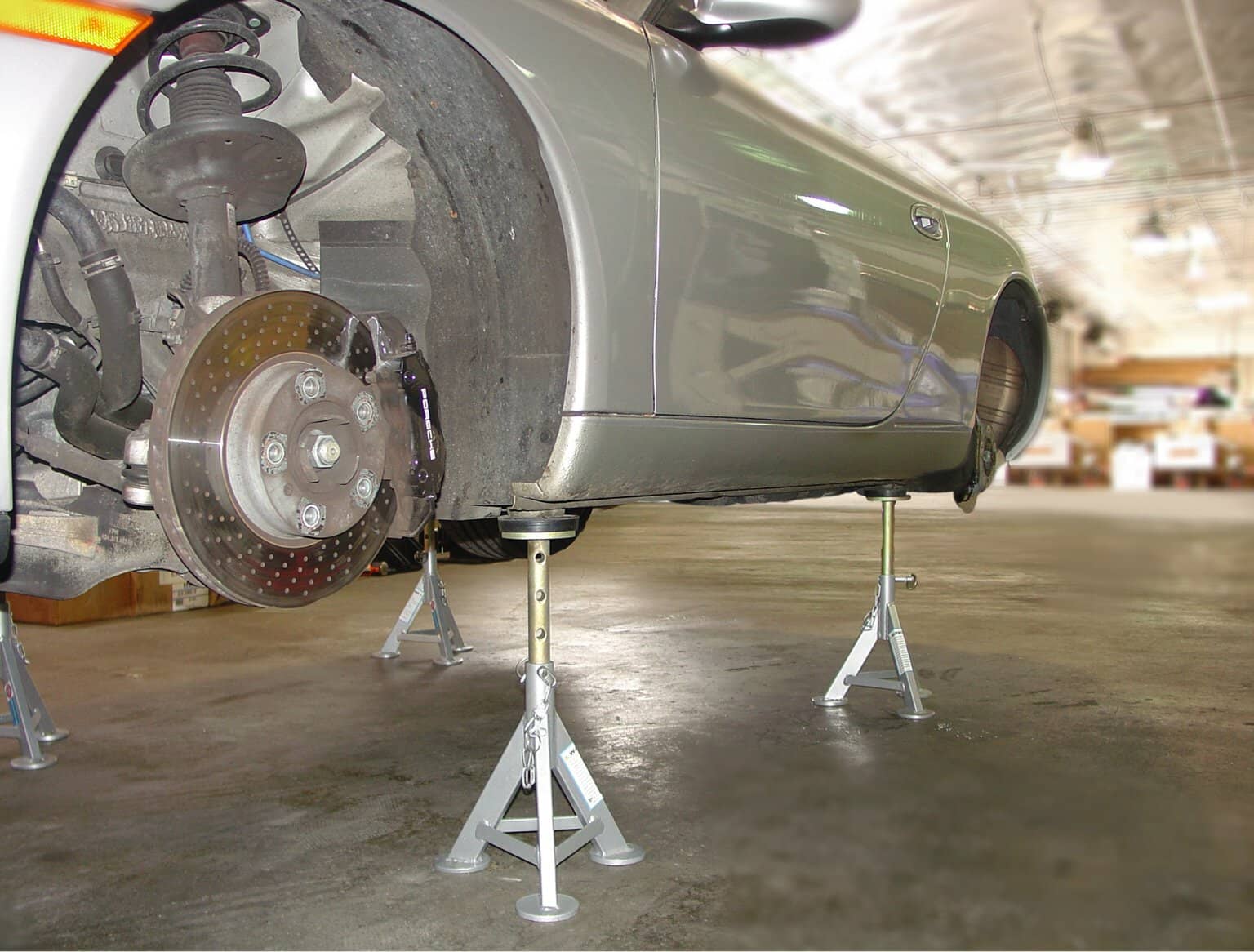
Place four jack stands at equal height on either side of the car as shown in Figure 3. This creates a very stable platform for the car. The factory jack support areas have metal cup pieces that act as locators for professional-style hydraulic lifts used at repair shops.
With the car supported on all four jack stands, you can carefully repeat the whole process to raise the car higher if needed.
Using a Jack Pad Tool
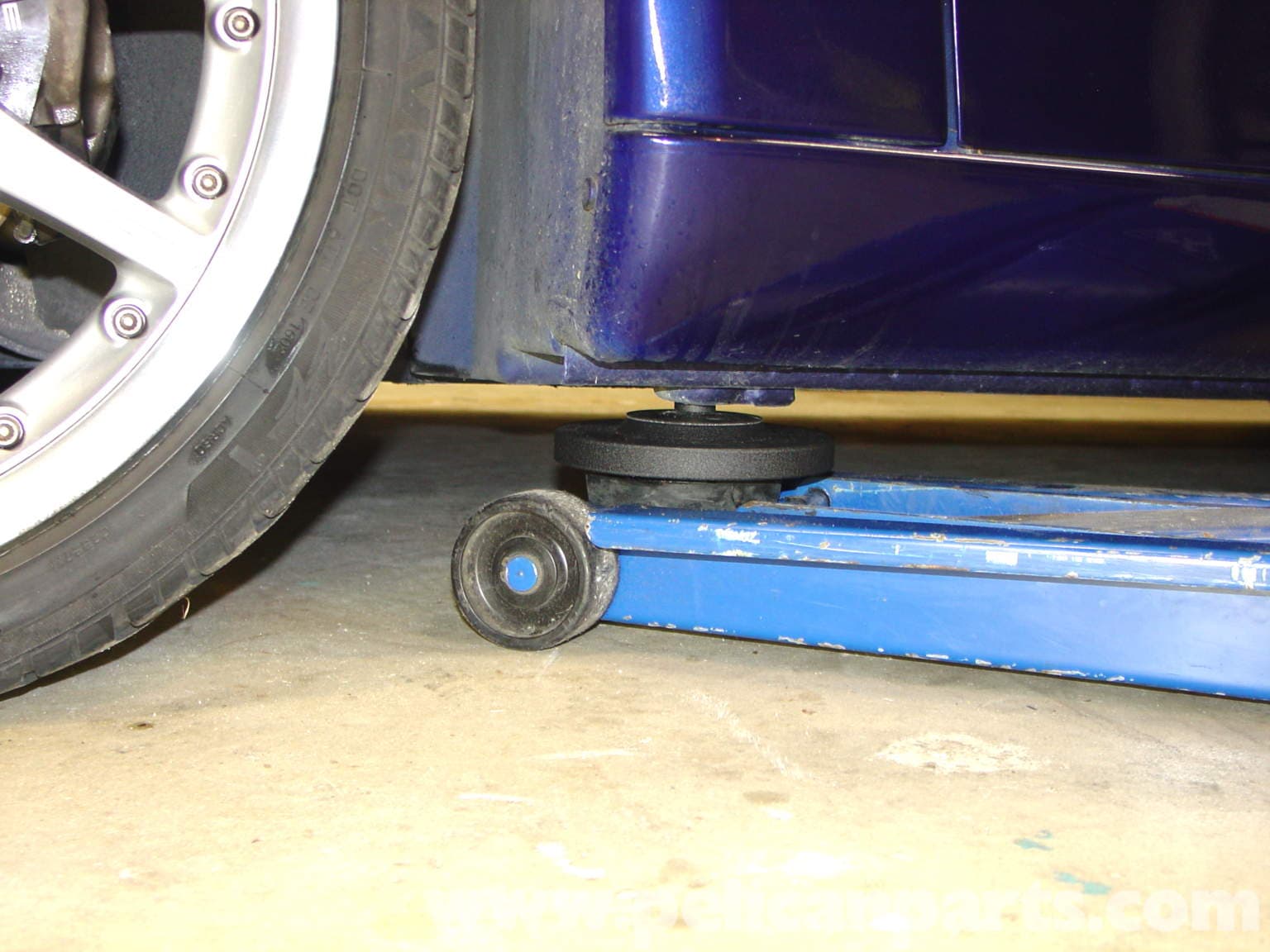
For better stability and ease of jacking up, you can use a jack plate tool (Figure 4). This tool attaches to the points under the car and gives you a nice, wide circular surface to use with your floor jack.
Recommended Floor Jack
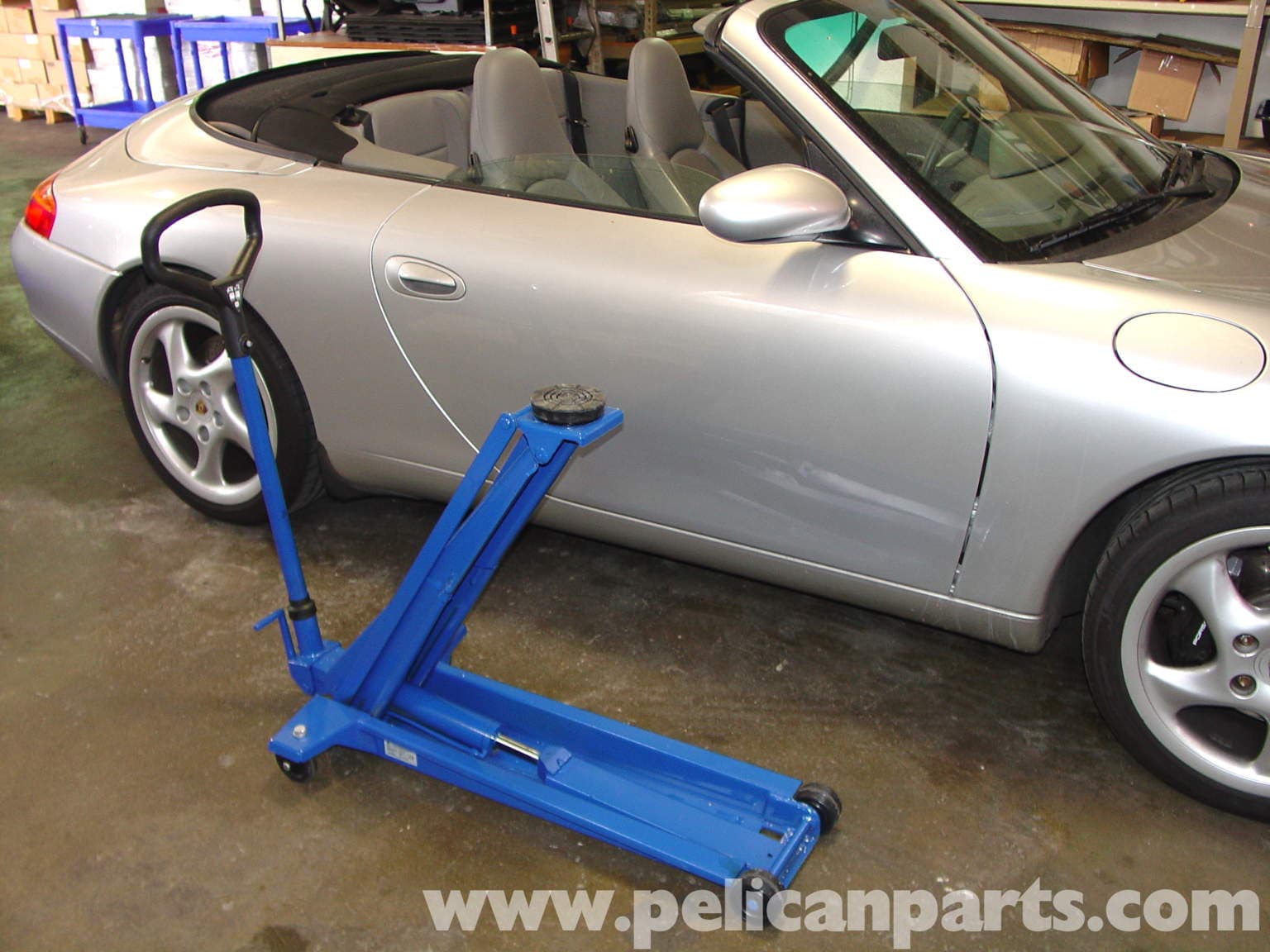
Based upon the author's extensive search, the DK13HLQ from AC Hydraulics is highly recommended (Figure 5). This jack has a minimum height of only 80mm (3.1 inches), allowing it to easily fit under lowered Porsches, and an unusually high lift of 735mm (29 inches) to raise the car onto jack stands in one swift motion. It also features an easy-to-use lift foot pedal.
Critical Safety Reminders
- Never work under the car with it suspended simply by the jack — always use jack stands.
- Always use a backup jack stand wherever you place your primary jack stands. One tiny flaw in the casting process can lead to a jack stand breaking.
- If you are going to remove the wheels, loosen the lug nuts before lifting the car off the ground, otherwise the wheels will spin.
- Stack the wheels in pairs underneath the car as an added measure of safety.
- Once the car is up and supported on jack stands, position the jack under the engine (without lifting) and push on the car to check for instability. If the car moves at all, it is not properly supported. It is far better for the car to fall while you are pushing on it than while you are underneath it.
Lowering the Car
When you are ready to lower the car:
- Be aware of where you are placing your floor jack — sometimes you cannot easily remove the jack when the car is lowered, or the handle may crush part of the chassis.
- Proceed very slowly — some floor jacks release very quickly.
- Place the car in gear or engage the parking brake before lowering — the car may tend to roll away right after it's put back on the ground.
Key Takeaways
- Always use jack stands — never work under a car supported only by a floor jack
- Use the reinforced front chassis area (yellow arrow, Figure 1) for the front jack point
- Use the rear suspension mounting point (Figure 2) for the rear jack point
- Place jack stands under the factory jack support areas on all four corners
- Use a backup jack stand as a safety measure in case a primary stand fails
- Stack removed wheels under the car for extra protection
- Test stability by pushing the car before getting underneath it
- Loosen lug nuts before lifting the car if you plan to remove wheels